If you asked me what my hobbies were, I would say that I like to read, write, draw, and game. I read by watching random YouTubers’ opinions of books before I read them myself, lest I waste my time on a sub-optimal book. I write by installing a host of new Obsidian plugins that will sculpt it into the best writing platform of all time, followed by watching videos on “The 7 Essential Writing Styles you NEED to Know - No. 4 will SHOCK you.” I draw by curating vast collections of reference images so that I may pluck the ripest of inspiration fruits when hunger strikes. I game by listening to my favourite video game podcasts to get the latest on the new hotness. Steam, my retail therapist, tells me we’re out of time over the whoosh of my credit card being swiped.
These are not hobbies. They’re not even things. These are pseudothings (inspired by the concept of pseudowork (Nørmark & Jensen, 2021)) - everything but the very thing itself. Pseudothings are vampiric entities that suck our time. They make us feel like we’re doing the thing without actually doing the thing. They’re thing adjacent. Pseudothings act as a shield to protect us from the fear of actually creating or playing but leave us with a hollow feeling that can take the shape of guilt, shame, and/or depression.
I realized this trap wasn’t just my problem after learning about The Optimization Paradox (Newport, 2026). For example, modern obsession with sleep scores (e.g., Oura or Whoop), and micro-supplementation can lead to orthosomnia (sleep anxiety caused by tracking sleep) or health-related anxiety. When every minute or habit is quantified, you stop listening to your body/mind and start obsessing over the metric. In trying to optimize your sleep, you sleep worse, boom, paradox. Hence, health tracking can be classified as a pseudothing.
It’s a well known principle that 80% of results come from 20% of efforts (Juran, 1951; Pareto, 1896).
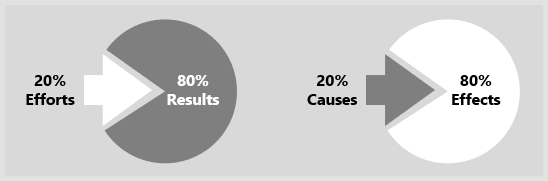
Those who are familiar with the Rocky movies, Rock IV in particular, will remember Ivan Drago had the best team of doctors and coaches the Soviets could provide. They scrutinized every detail, had access to the most cutting-edge fitness equipment in the world, and all the anabolic steroids one could inject. Drago focused on trying to eek out the final 20% of results without cementing the fundamentals that comprised the initial 80%. Our Italian Stallion, on the other hand, had to train in the barren unforgiving Siberian ice and snow using nothing but old farm equipment. Rocky focused on honing his initial 80%, not bothering with the pseudothings that could’ve taken him off course. Guess who won?
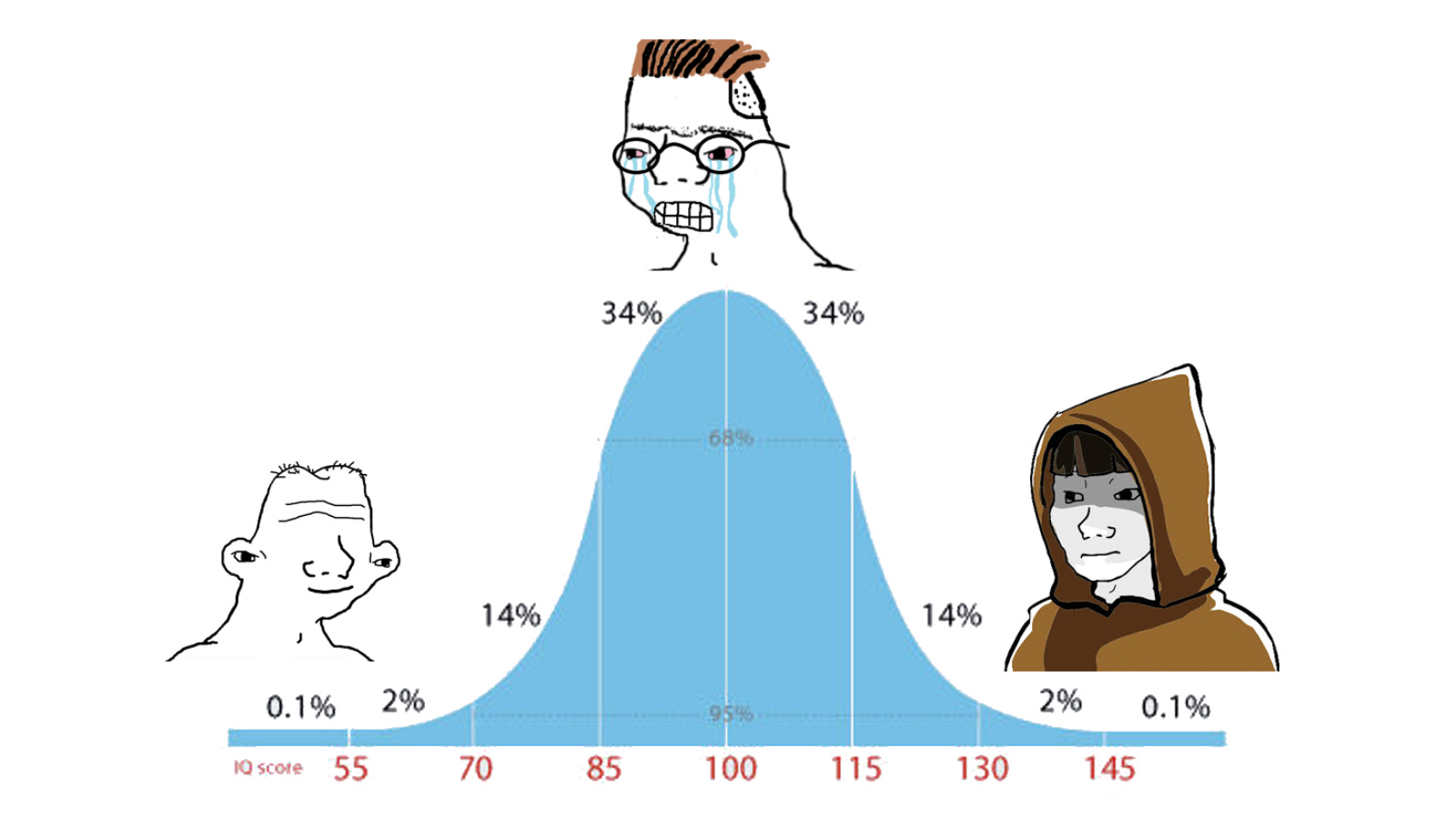
This meme resonates with me whenever I see it. The left and the right focus on the 20% efforts that get the 80% results. The middle folks delude themselves into thinking that they are squeezing out the last 20% of results, when really they are most likely doing pseudothings. I can map this curve onto so many things in my life. For example:
- Start by using the default Obsidian theme with no plugins
- Install 100 plugins and make/manage my own theme
- Realize that it’s all too fragile, a maintenance nightmare, and that I’m not actually using Obsidian.
- Go back to using the default Obsidian theme with minimal plugins
However, to realize that 80% of the results came from the initial 20% of efforts requires going through that painful middle sometimes.
Implementing the 80:20 rule is an act of optimization. If I identify that it takes me 1 hour to get 80% done, and an additional hour to get the last 20%, that doesn’t sound like an optimal use of time to me. As perfectionists, we trick ourselves into spending an incredible (read, irrational) amount of time on the last 20%.
One thing on which I pride myself greatly is my attention to detail. As a teacher, I can spend days and weeks on polishing a lesson plan, knowing full well that I’m in the diminishing returns stage of my output. My students often comment on the clarity and quality of my material which helps me justify the investment. I’m afraid that if I stop at the 80% point that my lessons won’t be as effective. I want to remind myself that I would rather spend the days-worth of 20% time on other things instead. My pride in “attention to detail” is actually just perfectionism keeping me from my family and life.
Therefore, I argue that perfection and optimization are mutually exclusive. To optimize is to understand and accept that it will never be perfect.
Optimization: An act, process, or methodology of making something (such as a design, system, or decision) as
fully perfect, functional, or effective as possible80% good as possible, recognizing that the last 20% would take disproportionate effort, thus being sub-optimal.
I want to live by this new definition such that I reinvest all the chunks of “20% time” towards things that I truly value. Spending an exorbitant amount of time “researching” the best game to play or art medium to use is not optimal because I’m not living my life the way I want to. Enjoying my time while playing the game or drawing the picture is the optimum.
- Identify a thing you want to do.
- List all the pseudothings for that thing.
- Eliminate the pseudothings by modifying your environment (Clear, 2018).
- ⭐ Super duper important step do not skip: Do the f!@#in’ thing!!!
Though, when it comes to my retro emulation handhelds, the optimization (i.e., curating my game library, scraping box art, testing different frontends, etc.) is the fun part. I’m sure it’s similar for motorheads that tinker on hotrods they’ll rarely drive, or bookworms who reorganize their shelves filled with books they’ll seldom read. If the journey is the destination, if the act of optimizing truly brings joy and it’s something you’ve explicitly decided to do, then it’s not a bad thing.